Why Temple Jewellery Is Back in Every Bride’s Trousseau

By Nandini Iyengar for Femina
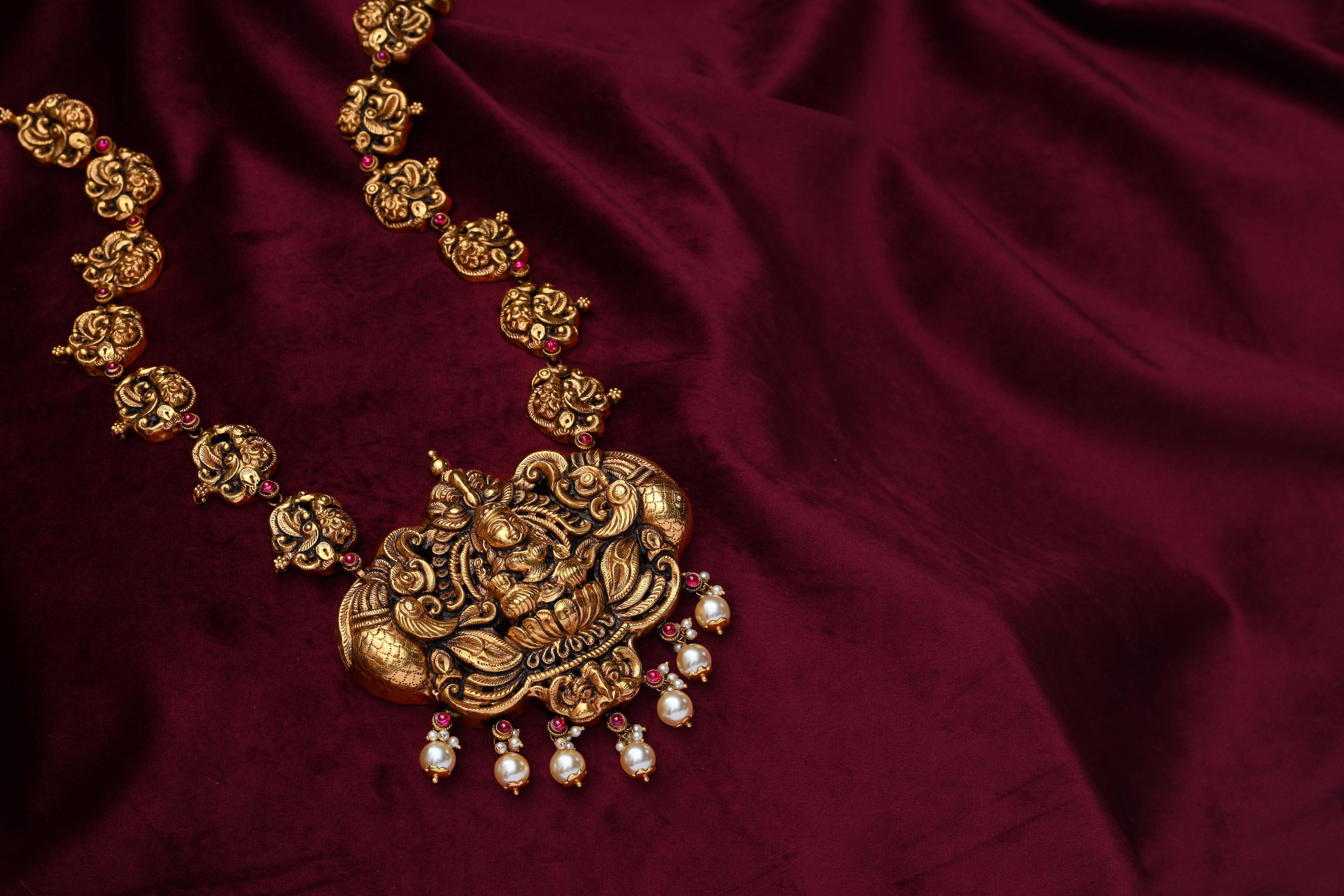
Originating in South India during the Chola and Pandya dynasties, temple jewelry was previously reserved for divine purposes only. Soon, it evolved into Jewellery worn by women on a regular basis, as well as for festive occasions. Classic designs in temple jewelry include idol motifs, intricate floral patterns, and bold statement pendants. Traditional temple jewelry is made without gemstones or diamonds. Occasionally, a red or a green gemstone might find its way as the center of attention in the Jewellery, but stones have usually been kept away from the designs. The entire designs are made with solid gold or silver metals, retaining the purity of the metals.
Modern brides are not shying away from experimenting with temple jewelry either. Gone are the days when gemstones and diamonds made a guest appearance. These days, temple jewelry has evolved into bold statement pieces that shine brighter with an array of gemstones and diamonds embedded in them. In addition to gold and silver, temple jewelry in modern times has also incorporated platinum. Kundan and jadau elements are also sometimes added in modern temple jewelry pieces.
Why Temple Jewellery Is Back in Every Bride’s Trousseau
The intricate details on temple jewelry Jewellery are something that goes with every outfit needed for a wedding. It pairs perfectly well with a heavy embroidered saree that feels straight out of a royal dream. Furthermore, layering necklaces accentuates the beauty of your overall outfit, giving it a royal feel. Temple jewelry is not limited to just necklaces, earrings, and waistbands. It can be used to adorn the bride from head to toe. From mathapatti and braid accessories to arm bands, bracelets, and rings, temple jewelry is a unique offering that embodies a regal touch.
Why Temple Jewellery Is Back in Every Bride’s Trousseau
Not only is the designer aspect rich, but the temple jewelry is also rich in its symbolism. The motifs of gods and goddesses, like Lord Ganesh and Lakshmi Devi, signify the integrated divine presence in the newlyweds’ celebrations, granting blessings every step of the way. The gemstones enshrined within each pendant and design carry spiritual meaning, as they are believed to possess healing energies. Floral motifs, such as the lotus and jasmine flowers, symbolize purity, prosperity, and fertility. Not just these, but animal and bird motifs, such as peacocks and parrots, are also commonly seen, hinting at a seamless union between nature and nurture.
All the above articles are provided by Femina